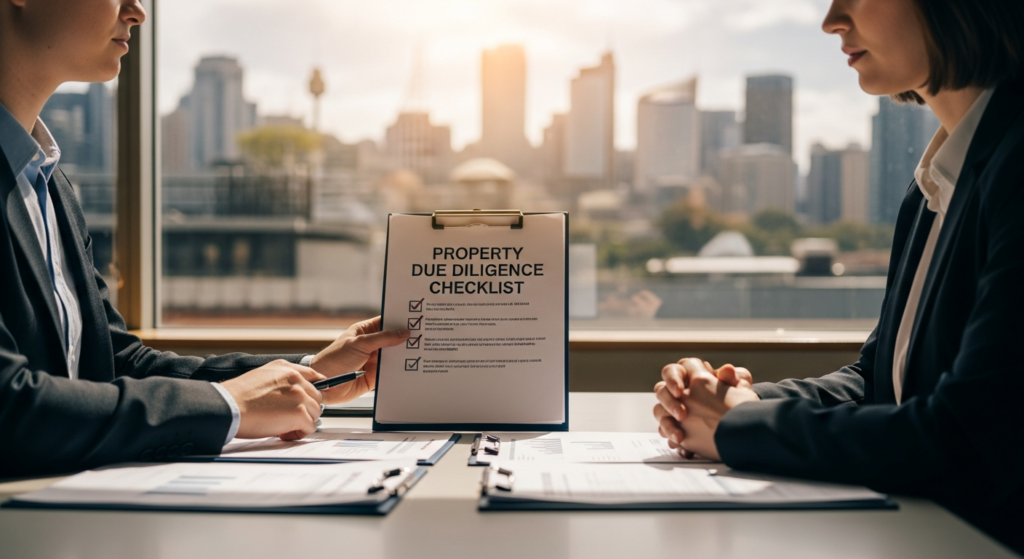
I’ve watched buyers make the same mistake for years. They fall in love with a property, rush through the checks, win at auction, and then discover something they should have known before they signed.
A $25,000 structural repair. A strata fund sitting at zero with a $60,000 special levy on the way. A suburb that’s been overbuilt for three years with nothing on the horizon.
A proper property due diligence checklist would have caught every one of those things.
Due diligence sounds bureaucratic. In practice, it’s just asking the right questions before you hand over the biggest cheque of your life. This guide breaks down the full process, the way a buyers agent actually runs it. Not the watered-down version from a government website, but the real thing.
Why Most Buyers Get This Wrong
Most buyers think due diligence is getting a building inspection and having a solicitor glance at the contract. That covers maybe 40% of what you actually need to know.
The real process has two tiers.
Tier one is market and suburb due diligence. It answers the question: is this the right area to buy in?
Tier two is property-level due diligence. It answers: is this the right property in that area?
Most checklists you’ll find online skip tier one entirely. That’s a problem. You can complete a flawless property due diligence checklist on a house in a suburb with a three-year oversupply problem and still make a very expensive mistake. Start at the market level. Then zoom in to the property.
Tier 1: Market and Suburb Due Diligence (Start Here)
Before you inspect a single property, you need to confirm the suburb stacks up.
Here’s what to check:
Vacancy rates. A rental vacancy rate above 3% means there’s more supply than demand. That puts downward pressure on rents and makes tenant turnover more likely. Target markets where vacancy is sitting below 2%.
Days on market. How quickly are properties selling? Falling days-on-market means buyer demand is rising relative to supply. A rising figure is a caution sign. Most major real estate portals publish this data for free.
Population and employment growth. Is the area attracting people and jobs? The ABS Regional Population data tells you whether a market has underlying demand or whether people are quietly leaving. Most buyers never look at this. That’s a gap worth using.
Infrastructure pipeline. Is a hospital, school, train line, or major employer planned for the area? These are the real price drivers over a five to ten year horizon. Planning portal announcements and local council development plans are public knowledge. Read them before you start inspecting.
Supply pipeline. How many new dwellings are approved or under construction nearby? High supply growth with flat population growth is a recipe for oversupply. That’s a headwind, not a tailwind. Property approvals data is available through the ABS and council development applications.
I go into more detail on the market selection process in the guide to building a data-led property portfolio. Worth reading alongside this checklist before you start your search.
Tier 2: Property-Level Due Diligence
Once the suburb checks out, you move to the specific property. Four categories. Work through all of them.
Legal Checks
Title search. Does the seller legally own the property? Are there caveats, mortgages, or court orders on the title? A title search costs $15 to $30 depending on the state. It’s the cheapest check on this entire list.
Contract review. Get a conveyancer or solicitor to read the contract before you sign. They’ll identify special conditions, easements, restrictive covenants, and anything unusual. Most states have a cooling-off period after signing, but don’t treat that as your due diligence window. It’s too short and too high-pressure.
Easements and overlays. Is there a drainage easement through the backyard? A heritage overlay? A bushfire overlay? These affect what you can build and how you can use the land. Check the council’s planning portal. It’s free and takes 10 minutes.
Unapproved structures. Has a deck, shed, or granny flat been added without council approval? Those become your problem the moment settlement completes. Ask the vendor in writing. Cross-reference with council records.
Outstanding rates and levies. Ask the vendor’s solicitor to confirm there are no outstanding council rates, water rates, or strata levies. These don’t disappear at settlement if they’re not resolved.
Physical Inspections
Budget $1,500 to $3,500 for this category. That might feel like a lot. On a $600,000 purchase, it’s half a percent of the deal.
Building inspection. A qualified building inspector checks structural integrity, roof condition, drainage, rising damp, and visible defects. Get a written report. A verbal summary from an inspector standing in the driveway is not due diligence.
Pest inspection. Termites are a serious problem across large parts of Australia. Estimates from pest inspectors suggest around one in three homes has had termite activity or damage at some point. A pest inspection looks for active infestations, past damage, and conditions that attract them. Non-negotiable.
Strata report (units and townhouses). This is the one buyers skip most often. Request the last two to three years of AGM minutes. Check the sinking fund balance. Look for upcoming special levies, unresolved disputes, or pending litigation. A strata report tells you the financial health and history of the whole building. A $50,000 special levy landing in year two of ownership will wreck a cash flow model.
Pool compliance. If there’s a pool, it needs to comply with state safety legislation. A non-compliant pool creates liability and costs money to certify or rectify.
Financial Checks
Comparable sales. What have similar properties sold for in the same suburb over the last six months? CoreLogic and the major portals publish recent sales data. Pull it yourself rather than relying on the selling agent’s estimate.
Rental appraisal. Get a written appraisal from an independent property manager, not the selling agent. A property manager with rental stock in that suburb will give you a realistic figure. Selling agents have every incentive to be optimistic.
Cash flow projection. Run the full numbers: rent minus mortgage repayments, council rates, water rates, property management fee (typically 7 to 10% of rent), insurance, maintenance allowance, and strata fees if applicable. If your borrowing capacity is part of the calculation, our guide on how to increase your borrowing capacity covers what lenders actually assess.
Insurance quote. Get a quote before you buy. High premiums are a signal. If the insurance cost is unusually expensive, that typically means flood risk, cyclone exposure, or a heavy claims history in the area. Find out before settlement, not after.
Environmental Risks
Flood mapping. Council websites publish flood zone maps. Some properties carry insurance premiums that make the investment case unworkable. Check before you fall in love with the property.
Bushfire risk. State planning portals publish Bushfire Attack Level (BAL) ratings. Higher ratings affect insurance costs and what you can build or renovate.
Contamination history. Was the site previously a service station, dry cleaner, or industrial site? Ask the question in writing via the vendor’s solicitor. State environment agencies also publish contamination records.
Airport noise and flight paths. Noise contour maps are available for most major airports. Tenants care about noise. High-noise corridors affect tenant quality and liveability over the long run.
Doing Due Diligence in a Competitive Market
OK, here’s the real problem no one talks about.
All of the above takes time. In a market where properties sell in days and agents push buyers to go unconditional, there’s genuine tension between doing proper due diligence and being competitive.
The answer is not to cut corners. The answer is to front-load the work.
In competitive markets, experienced buyers agents get as much of the due diligence done before making an offer as possible. Building and pest inspections get ordered before auction. Contract reviews happen before auction day. Title searches happen before auction. Yes, you’re paying for inspections on properties you might not win. That’s the cost of buying well in a competitive market, not a reason to skip it.
If you’re consistently losing at auction because others are going unconditional, understand what that risk actually means. I’ve covered similar pressure dynamics in the piece on off-the-plan property risks, where buyers are often pushed into signing before they’ve done the full process.
What a Buyers Agent Does Differently
The property due diligence checklist above covers the mechanics. What a good buyers agent adds is process, data access, and no vendor bias.
We run the same two-tier checklist on every property we assess, every time. We use CoreLogic analytics, vacancy rate data, and planning overlay tools that most buyers don’t have direct access to. We have established relationships with inspectors, conveyancers, and property managers who give us honest assessments, not optimistic ones.
The bigger difference is incentive. We’re not paid by the vendor. We’re not trying to close the deal. If a property fails due diligence or the numbers don’t work, we tell our clients to walk away. That’s harder to do when you’ve found the property yourself and you’re emotionally invested.
If you’re weighing up whether to manage this process yourself or bring someone in, the guide on whether a buyers agent is worth it in Australia covers that honestly.
What does due diligence mean when buying property in Australia?
Due diligence is the process of investigating a property and its surrounding market before committing to purchase. It covers legal title checks, physical inspections (building, pest, strata), financial analysis (cash flow, comparable sales), and environmental risk assessment. A complete property due diligence checklist also includes suburb-level research before you even look at a specific property.
How long does due diligence take when buying property in Australia?
Property-level due diligence typically takes 5 to 10 business days after exchange, which lines up with most state cooling-off periods. In competitive markets where buyers need to go unconditional, front-loading due diligence before making an offer is standard practice for experienced buyers. Market-level suburb research should happen before you start searching, so treat it as an ongoing process rather than a single event.
How much does property due diligence cost in Australia?
Budget $1,500 to $4,000 for a full set of property-level checks. A building and pest inspection typically costs $500 to $900. A strata report costs $200 to $500. A conveyancer reviewing the contract adds $800 to $2,500 depending on complexity. Title searches cost as little as $15 to $30 per state. On a $600,000+ purchase, these figures are a rounding error compared to the cost of getting it wrong.
What happens if I skip due diligence on a property?
You take on the risk of unknown defects, legal encumbrances, or financial problems you would have caught with proper checks. The costs can range from a few thousand dollars for minor repairs to six figures for structural issues, contamination, or a failed strata fund. Once you’ve settled, those problems are yours. There’s limited recourse against the vendor if you didn’t ask the right questions before signing.
Can I do due diligence before making an offer in Australia?
Yes, and in competitive markets, this is standard practice for serious buyers. You can order a building and pest inspection, request strata records, get the contract reviewed by a conveyancer, and run your financial analysis all before making an offer or bidding at auction. It costs money on deals you might not win, but it removes the risk of buying without knowing what you’re getting.
Due diligence is not the exciting part of buying property. It’s the part that protects everything else.
The investors I see build strong portfolios over time treat this process seriously on every purchase, not just the first one. They walk away from deals that don’t stack up, even when they’ve already paid for inspections. That discipline is what separates a good portfolio from an expensive lesson.
Not sure if a buyer’s agent is right for your situation? Let’s have a no-obligation chat. Book a free discovery call and I’ll give you an honest read on where you’re at.